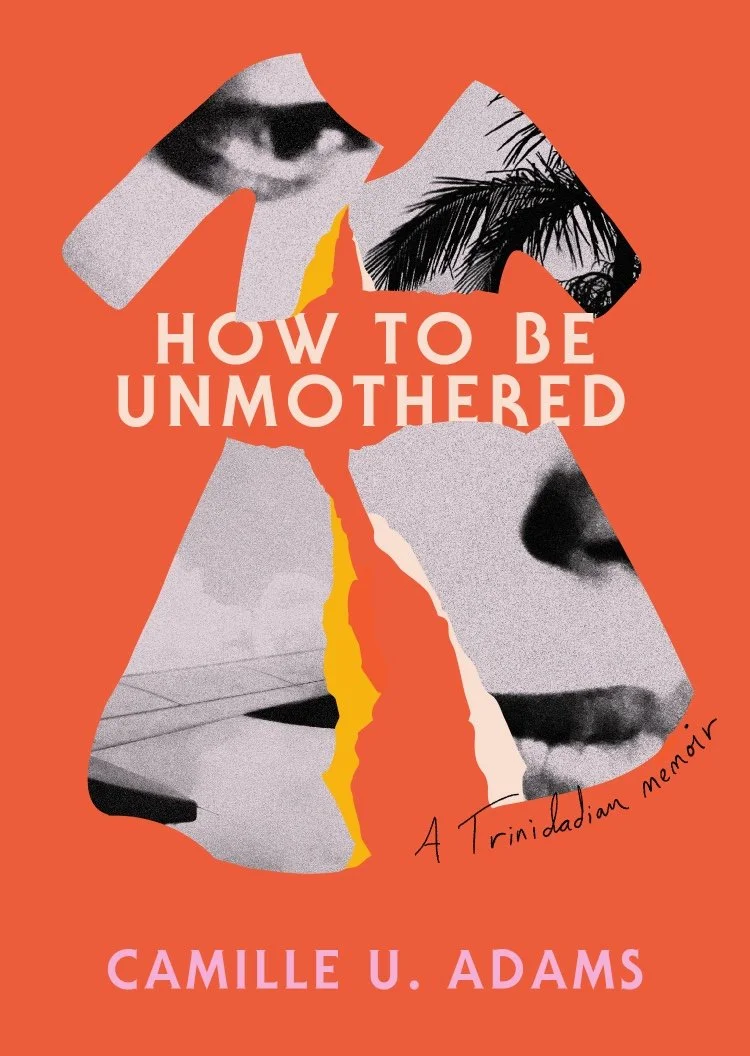
How to Be Unmothered: A Trinidadian Memoir and The Matter of Absence
by Lousie Gerodias
February 2026
The loss of a mother is an absence that generates as it destroys. For daughters of emotionally unavailable mothers, this loss propagates pain that forges new identities by force, but it’s a loss met only with silence.
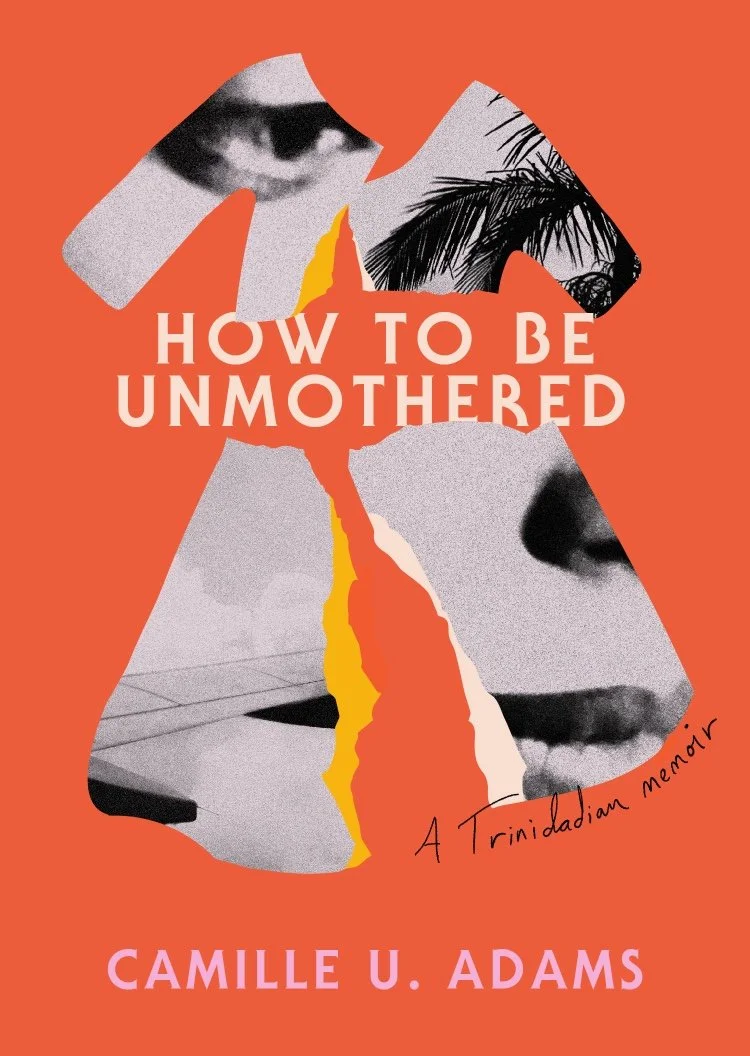
In her memoir How to Be Unmothered, Trinbagonian writer Camille U Adams details her adolescence unfolding against a lineage of maternal neglect. First, she was her mother’s caretaker, bearing the brunt of endless grievances about her abusive father. Later, a thirteen, when her mother fled to New York, Adams became the mother her siblings never had. Adams’s forced maturation is apparent from the narrative’s opening.
In chapter two, we follow her as a nine-year-old down Covigne Road to ‘[help] Mummy keep Daddy and his belly in a non-beating mood’ (65). Over seventeen pages, we watch her maintain vigilance, hold her breath, and at one point wet herself, only to find her family already mid-dinner when she reaches home. I held my breath alongside Adams throughout this ordeal.
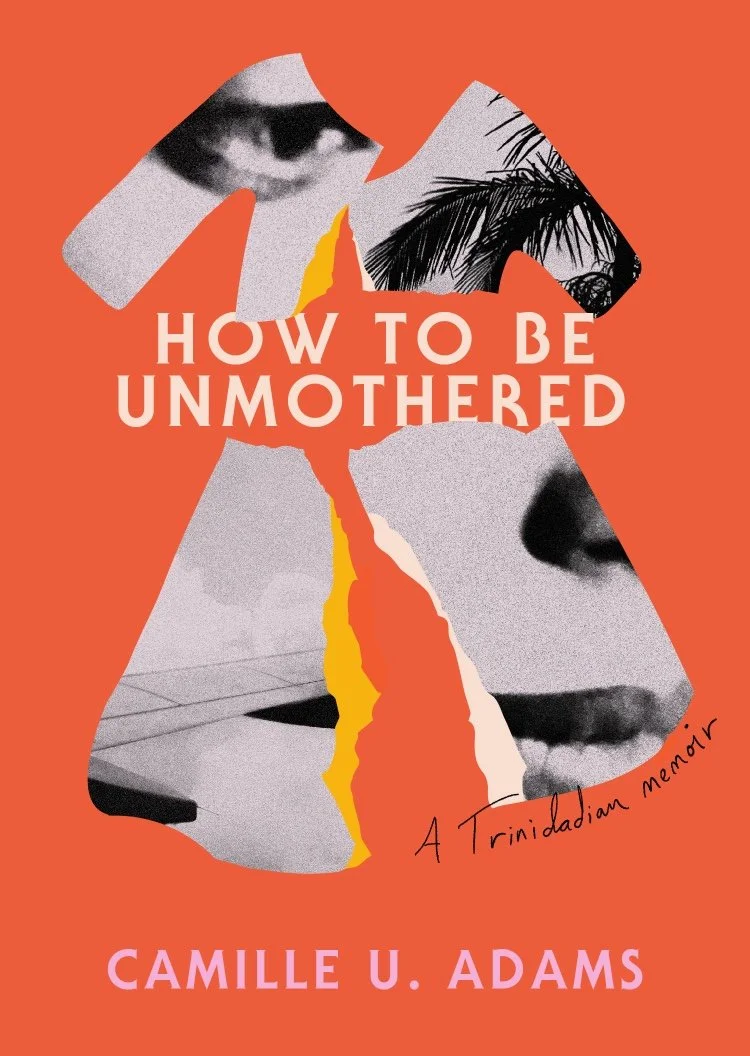
How to be Unmothered: A Trinidadian Memoir x Camille U. Adams
by Jacqueline Nyathi
November 8, 2025
I don’t think I’ve ever read anything quite like Camille U. Adams’s prose poetry memoir. Lots of books are called poetic, or lyrical; but when you read How to be Unmothered, you’ll find out how completely it redefines those terms.
This is a story of a mother and her daughter: how she abandoned her child, not once but countless times, both physically and emotionally—and in all of the ways that matter. It’s the story of broken families and evil and still somehow absent fathers, of abuse and trauma echoing across generations. It’s the story, too, of how family members gang up against their weakest even as they protect those who cause the most harm—the hypocrisy of church folk. It’s the searing indictment of a wounded child.
The style that Adams has chosen to write in is striking for how much it occludes as it reveals: This is not a direct assault on her mother, and it aches with a daughter’s need to tell her own story without humiliating her mother or airing the family’s dirty laundry. And yet the daughter is compelled to speak, her anger palpable. And speak she does, in words full of rhythm and pain.
Mothers and Daughters: When Memoirs Talk to Each Other
by Martha Anne Toll
November 25, 2025
The un-motherings referred to in the title are physical abandonments, to be sure. But, there are myriad other ways in which Adams is un-mothered. Even when her mother is present, she acts the narcissist. She keeps herself the center of attention and plies her daughter with secrets, forbidden knowledge of her father’s cruelty and of her mother’s methods of placating him, often through sex.
Adams is ever the subject of her mother’s and other family members’ criticisms. Early on, we are given the essence of her unmothering —
My mother knows two modes: unwashable, cloying honey. And rage.
In the last part of the book, Adams becomes philosophical and reflective. She has escaped to America. Confronted with the brutal realities of American racism, and with her mother’s selfishness once more, she shares her wisdom. We see her power and drive to become who she is today.
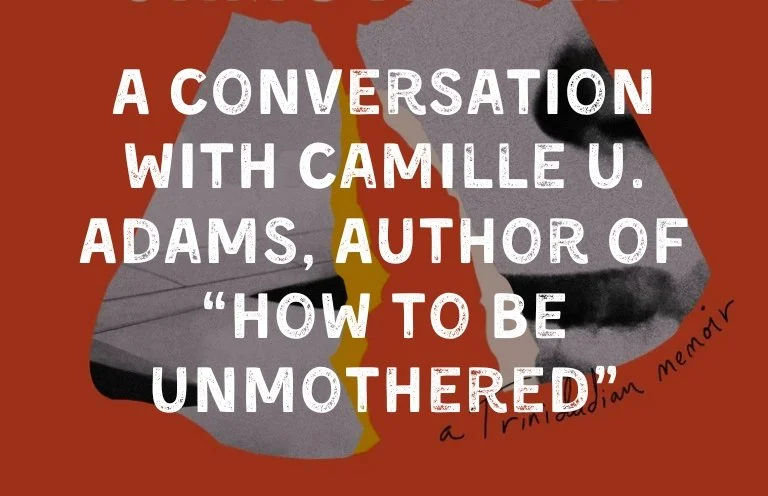
A Conversation with Camille U. Adams, Author of How to Be Unmothered
with Irina Costache
December 3, 2025
Irina Costache: I’d like to start by asking you about something you mention at the very end of your book, in the acknowledgments, which is that you are proud of yourself for embracing disillusionment. Can you tell me why that was so key in your writing process?
Camille U. Adams: I am really interested in the ways in which people don’t experience cognitive dissonance and stay within entrapment and stay with abusive, narcissistic men and family situations that are so destructive for them, and don’t allow themselves to see these people differently. How do you avow this love from a parent when experientially, everything is contradicted? Like, someone says they love you but it doesn’t look like love, it doesn’t feel like love, the way they speak to you isn’t love, and you still, because you have this need (I mean, humans have a need for connection and community), you still maintain that and don’t allow yourself to have that break, allow that disillusionment, allow yourself to grow out of that, allow yourself to be estranged, allow your life to take a different path—that I can’t understand. And I see it within my sisters. I see it in everybody else, because I am totally the black sheep. But I wouldn’t have been able to write this book, I wouldn’t have been able to heal, I wouldn’t have been able to be strong, I wouldn’t have been able to do anything if I had not allowed myself to let disillusionment reign. I think that’s my superpower. I continue to be disillusioned.
Unmothered, Unafraid, and Free: A Conversation with Camille U. Adams
by Caryn Rae Adams
Oct 3, 2025
Caryn Rae Adams: The title of your book, How to be Unmothered: A Trinidadian Memoir is immediately evocative and defiant. What does this phrase mean to you at this stage in your life?
Camille U. Adams: Oh, that’s such a beautiful question! Initially, I thought of the book as a manual – that I’d be explaining the psychology and sociology of the ways a mother or maternal figure can unmother a daughter. Presently, that title holds the breadth and depth of what it means to be unmothered: genealogically, epigenetically, intergenerationally, racially, culturally, and personally. Yet, unmothering extends beyond me personally, as, at this point, there’s simply too much at stake for silence. Too often, we don’t talk about how harms are visited upon children by mothers.
CRA: Evelyn O’Callaghan says that with autobiography, some things may be shaded, concealed and hidden. But I get the feeling that you’re not going to do that. Am I right?
Literary MagNet: Camille U. Adams
by Dana Isokawa
From the July/August 2025 issue of
Poets & Writers Magazine
I am a Trinidadian writer,” says Camille U. Adams, author of the memoir How to Be Unmothered: A Trinidadian Memoir (Restless Books, August 2025). “Not just a writer who was born and raised in Trinidad and Tobago and, thus, cites her birthplace in her bio. No. I am a writer who invokes the oral chantuelle tradition of my home. I am a writer who transcribes the unique idioms, is faithful to the grammatical structures, and channels the musical aurality embedded in our call-and-response narration when we enter storytelling mode.” This musicality infuses all of Adams’s prose, including her debut memoir, in which she narrates a childhood impacted by violence and abandonment. In reckoning with her family’s abusive dynamics, Adams also draws on the island nation’s colonial history, landscape, and storytelling traditions to create her own language of survival.

Explosive memoir on legacy of mothers who abandon daughters
by IRA MATHUR
2024
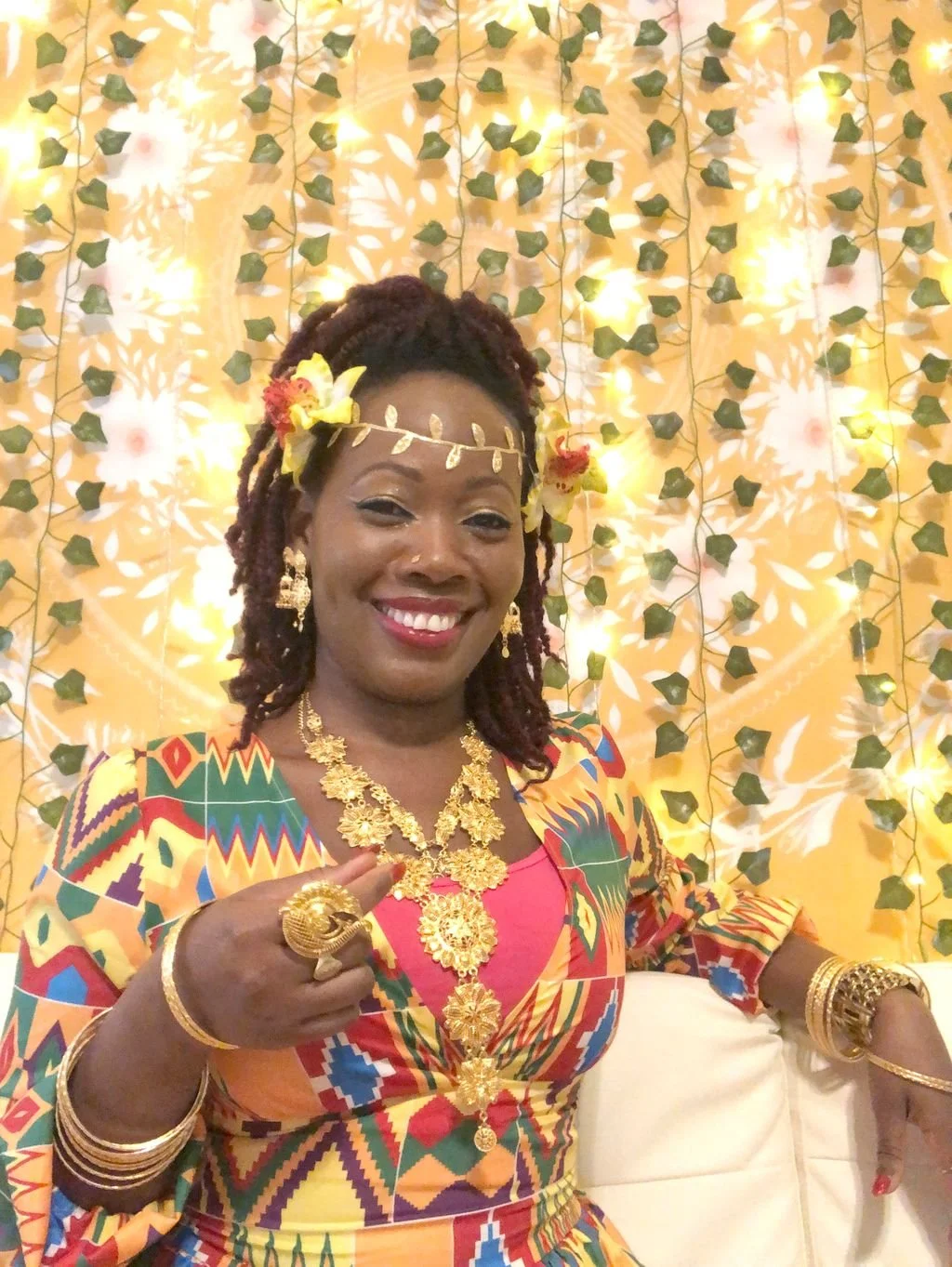
Dr Camille U. Adams, who has pursued her passion for creative writing and literature since her days at Bishop Anstey High School, has written an explosive memoir–How To Be Unmothered, about Trinidadian women with a legacy of mothers who “conceive and abandon their children.”
The writer who has excavated her life for her writing says “Deep trauma isn’t easy to face. Not since Annie John (by Jamaica Kincaid) has a Caribbean work of literature showcased an evil mother as my memoir does. I am writing to that 13-year-old girl who needed someone to say it’s not just you.”